Tuesday, 5 July 2011

Punting On the River Cam

On Thursday following class we had our first adventure punting on the river Cam.  We spent a fair bit of time the day before watching people navigate the river (both successfully and unsuccessfully!) and were excited to give it a go ourselves.  Powering a boat with a pole alone is surprisingly difficult, but made for some super photos.  When our hour on the river was up everyone had improved a great deal - by the end of the summer we'll all be punting pros!

The first boat is launched...


Jeff and Derek at the helm

The historic mathematical bridge
Punt jam
Liz learning to rudder
Adam and Fay go pole-less!
Even professors punt...
Scott is a natural
Sam's punt and the beautiful King's College grounds
two-by-two
Still smiling...
Erik F free from an adventure in the tree...
All in all, this was a great way to see another side of Cambridge and to spend some time together after class.  Next time there will need to be some video...

Sunday, 3 July 2011

A Free Day In Wales

For our first full free day on Sunday, June 26th, Erik F, Scott and Will decided to explore some of the amazing castles in Wales.  They headed north east from Electric Mountain to Beaumaris Castle and then continued north west to Caernarfon Castle - below are some photos and a map from their quick (but packed full!) trip:

Their two main destinations


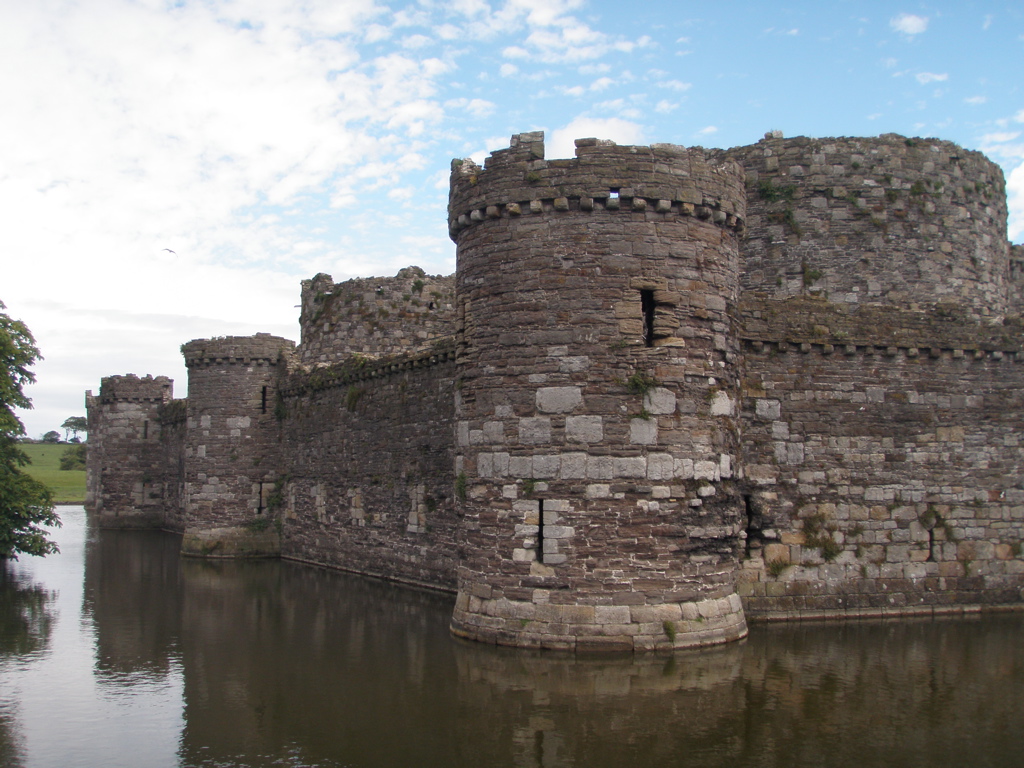
Beaumaris Castle

Beaumaris Castle moat

Erik F at the castle ruins

Beaumaris Castle

The trio

Caernarfon Castle

Caernarfon Castle

Overlooking the Manai Straight
Thanks for the fantastic pictures Erik, Scott and Will!

Saturday, 2 July 2011

Quarry Bank Cotton Mill

The Quarry Bank Mill was an excellent way to cap off our time in the Midlands.  The mill combined a number of the components we had been learning about thorough readings and other site visits and gave an excellent look at the working conditions of the time.  The setting was spectacular, and the day perfect (a welcome change after a string of dreary weather) - it was often hard to picture the brutal working conditions that occurred in such a picturesque location.
The Quarry Bank Mill
Our tour guides, Tony and Jamie led us through the cotton evolution at the mill starting with hand spun cotton thread to mass produced fabrics utilizing steam powered equipment.
A demonstration of the early woman-powered looms
A dramatic increase in scale
It was amazing to think that this process began with individual spools and ended with dozens.  Below is a video of this amazing piece of equipment, called a spinning mule, invented in the 1700's:


From a single loom to hundreds powered by steam
Below is a video of one of the steam powered looms in action:


We ended the day with a surprise stop at the Old Trafford soccer pitch - home to the Manchester United team.  Our group toured the stadium and got to see the inside of the changing room, the team pre-game waiting room and even got to sit in the cushy pitch-side manager's seats.  If only we could have run around on the lovely green pitch itself...


Learning a little stadium history
The changing room

Number 1 fan...
The boys trying out the benches
checking out the player's lounge
Super psyched Sam
Team photo

Our time in the Midlands coming to an end, we headed back to Shrewsbury for a quiet evening before venturing on to our primary home for the summer: Cambridge.

Friday, 1 July 2011

The Electric Mountain and Slate Caverns

Saturday took us across the border into Wales for the day.  While the weather left a bit to be desired, the landscape was still breathtaking.
Endless shades of green...

Almost to Electric Mountain
Our first stop - the Electric Mountain - was nestled into the side (and the inside) of a mountain predominantly made up of slate.  Enormous steps were cut into the mountain face (a modern day practice we would learn about that afternoon at the Slate Caverns), and the facility sits sandwiched between two lakes, one above and one below.  It is the transfer of this water from one lake to the other that provides the amazing amounts of power Electric Mountain generates.

Electric Mountain
Unfortunately, we were not allowed to take photographs on the tour, but we were (yet again!) in hard hats as we (yet again!) headed underground.  We boarded a bus to head deep into the mountain and into the largest man-made cavern in the UK (nicknamed "The Cathedral" as St. Paul's Cathedral could fit inside this massive underground space).  We were lucky to visit on day when the facility was generating power, so we were able to see the mighty turbines spinning their generator shafts (which were the size of large tree trunks) at 500 revolutions a minute. 

Picture of the turbine pulled from the EM website

Following our tour of the Electric Mountain, we headed to the Slate Caverns.  This area of Wales is known for it's high quality slate and has been mining the rock for hundreds of years.  The Llechwedd Slate Caverns where we visited have a working quarry and our guide for the afternoon still works as a miner.

We began our tour with a self guided "deep-mine" exploration, which required a ride on a very steep incline trolley. 
Justin, Joel and Vishal squished into our tiny incline car
Again underground, we learned much about the life of a slate miner and had many opportunities to compare and contrast the process of obtaining slate with that of coal.  Most agreed that if forced to choose, the slate mine would be a slightly better option - although still amazingly challenging work.

Multi-colored hard hats this time!
After our deep mine tour we made our way to the Miners' Tramway.  Here we had a live guide who demonstrated the process of removing slate, talked further about the historical and contemporary uses for the material, explained the roles in the mine both past and present, and even gave us a go at using some of the old mining equipment.
On the tram

A dummy miner checking the roof for stability
Our day in Wales ended there and we climbed back on the bus, soggy and tired.  Sunday will be a free day for the students before our Monday trip to The Quarry Bank Mill.  That will mark our last day in the Midlands before heading to our more permanent summer home of Cambridge.

Gladstone Pottery Museum


 After a morning of class, our coach headed for the city of Stoke-On-Trent, which houses many of the most well known potteries in the UK.  Our time there was spent at the Gladstone Pottery Museum learning about the history of producing ceramic pieces for daily use.


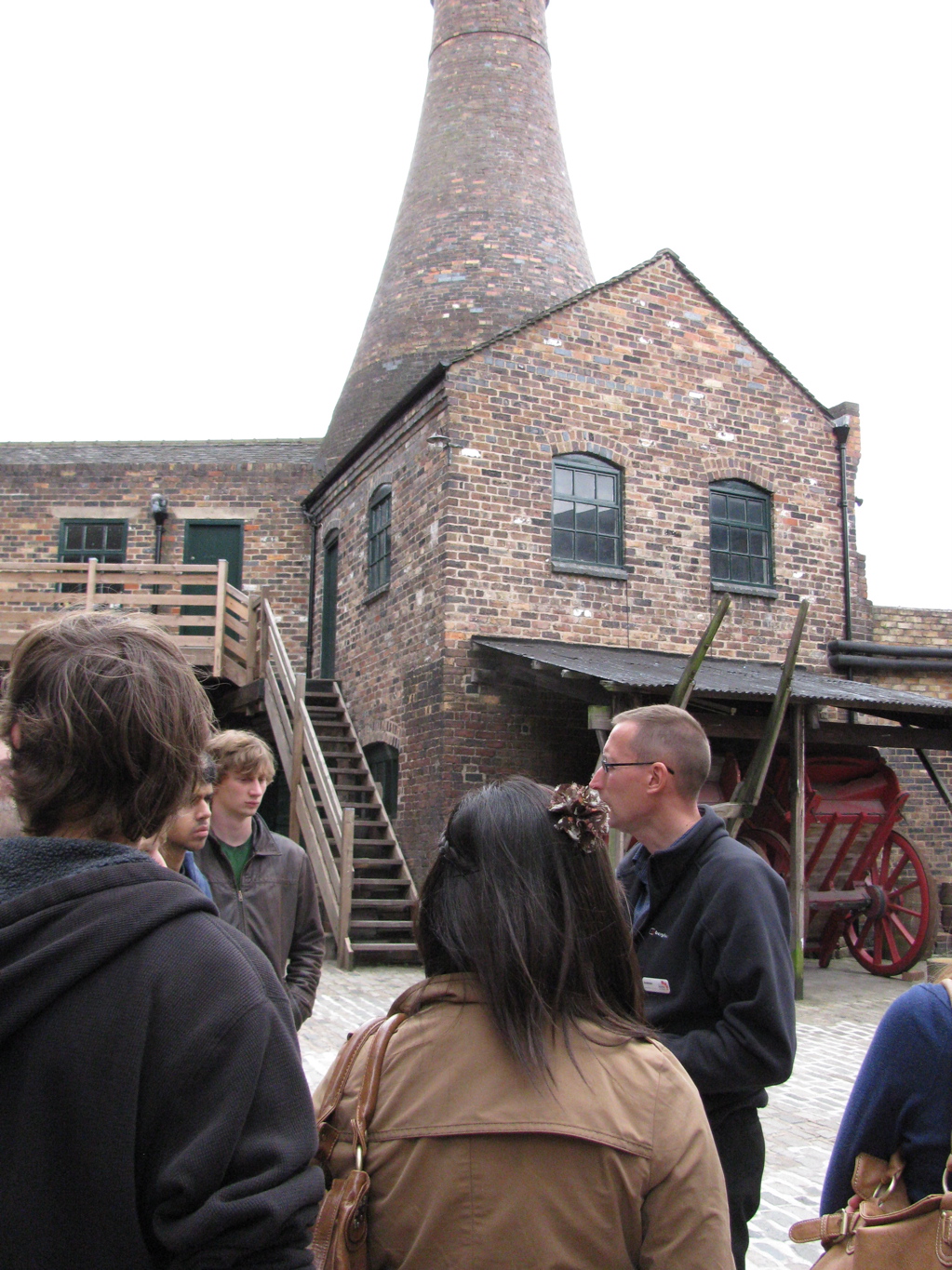
Beginning our tour of the pottery
The ceramic process seemed to fit in with our studies of the industrial revolution thus far - long working days, intensive physical labor, and the regular use of children as cheap manpower. 

Justin demonstrating manually powering the pottery wheel - a job often held by children
 Our guides led us through the ceramic process from making the clay out of slurry to stacking and firing the enormous bottle kilns. 


A bottle kiln partially stacked with saggars (the containers that protected the ceramic from debris during firing)
Here again we saw the broad reach of coal power, keeping the steam engine humming and the kilns hot.  Along the tour there were a number of excellent demonstrations, shown by highly skilled craftspeople.  The artist working on the wheel talked of the fastest potters being able to throw a large vase in just 40 seconds!  We also spent some time watching a woman make bone china flowers, she was able to replicate in clay over 100 different types of flowers - again producing them at a dizzying pace.

We watched our demonstrator produce a rose
Another highlight of the tour was the exhibition, Flushed With Pride that took us through the history of the toilet.  It was extremely informative and an excellent reminder of how important this component of life was to improving our standard of living.

Heading into the exhibition hall

A bit of interesting history...
Toilet trivia
 
Leif and Justin testing their knowledge

More ladies in the tub!

 Even though our day was full with class and touring the museum, we did have a little time to check out a local haunt - the Gladstone Snooker and Pool hall.  A number of the students tried their hand at British pool (which is surprisingly different - much smaller tables and balls than in the US) and the competition was swift.

Carls take over the pool hall!

Vishal setting up a shot
Even the director got in on the fun!
The pool hall was a fantastic way to finish out our time in Stoke-On-Trent and might require another round during our summer abroad...